Play (2021)
by Mark St. Germain
Directed by Bryn Boice
Central Square Theater
Central Square, Cambridge, MA
September 10 – October 11, 2026
With Paula Plum (Eleanor)
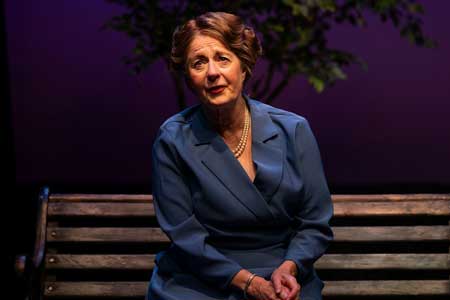
in “Eleanor”
Photo: Nile Scott Studios
Courtesy of Central Square Theater
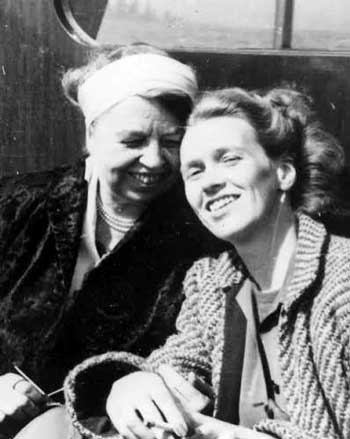
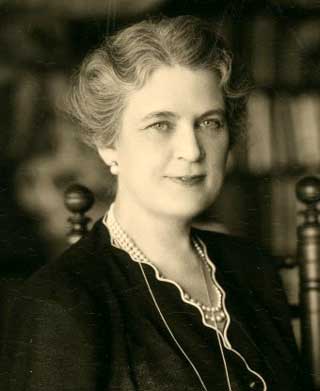
The story is familiar to most. Eleanor Roosevelt, noted and celebrated wife of long-time president Franklin Delano Roosevelt, lived an active, but personally complicated, life. She and Franklin had five children and remained married, but their personal life was unsettled by Franklin’s long-time affair with Lucy Mercer (Rutherfurd) who had been Eleanor’s social secretary. With knowledge of the affair, personal relations between Eleanor and Franklin became attenuated, though Eleanor remained active and engaged as first lady. As well, Eleanor seemed to have her own dalliances with at least a couple of people – her male bodyguard, Earl Miller, and a journalist named Lorena Hickok who became a close friend and likely considerably more. The complications with Franklin were, as this play suggests, underlined and surrounded by Eleanor’s equally complicated recollections of her father, to whom she was undyingly devoted until his death when she was ten, and in memory throughout her life, but who had a passel of problems of his own.
This beautiful play manages to carry this quite heavy load of knots with perspective and also a good deal of humor. The writing here is not only dense and interesting, but also quite witty and engaging throughout. Instead of plodding through Eleanor’s biography deliberately and literally, the script raises the whole Lucy issue right from the outset and begins to set the account of Eleanor’s romantic involvements along with it, serving to not hang up the audience in too much speculation and anticipation at the outset.
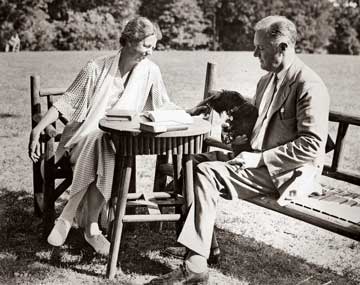
Wry notes appear throughout. Certainly, Eleanor’s tough relationship with FDR’s mother, Sarah, is well-known, and it is lively throughout to hear about Eleanor’s not very happy responses to her. She recounts her fairy-tale life, replete with a witch, indeed FDR’s mother. When Eleanor and Franklin were engaged, Eleanor burst into tears, and so did, as she recounts, FDR’s mother, but not from the same impulse.
The portrayal of Louis Howe, long-time political advisor to FDR, is particularly fun, and Paula Plum departs from her nicely embodied patrician accent for Eleanor to characterize Howe’s tough-guy, guttural, demeanor. Eleanor’s account of her distant – fifth-cousins once removed – relation to FDR is quickly but entertainingly delivered, and we get reminded, as a part of this, that Eleanor was Teddy Roosevelt’s niece, so we get a little cameo of him as well.
Along the way, as part of the lightness, Eleanor describes Winston Churchill coming out of the bath in the buff and recalls his response: I have nothing to hide from the President of the United States! , with characteristic Churchillian wit. Eleanor’s repeated recollections of her first cousin, Alice Roosevelt (Longworth), Teddy’s daughter, are also full of mean fun, with touches like about how the elegant Alice told Eleanor to keep her lips closed over her decidedly prominent teeth.
All of these characters, by the way, are brought to the fore by the masterful Paula Plum, who manages to bring this cast to vivid life while maintaining our consistent belief in her main character. One must certainly credit, along with Plum, director Bryn Boice and dialect coach Danny Bryck, for helping to pull this off effectively.
In addition to poignant and insightful observations about her relationship to and memory of her father, Eleanor recalls her own problematic assessment of herself as a mother of five: I gave my audiences the love I should have given to my children. And, additionally: The only one I really wanted to mother was my father.
Numerous of the political and social issues for which Eleanor became celebrated are raised. Largely due to her influence, the great black soprano Marian Anderson sang at the Lincoln Memorial in 1939. As well, during World War II, Eleanor battled with FDR about taking in Jewish children as refugees from the Nazis. She also fought with FDR about the internment of Japanese-Americans during the war. She recounts, with some pride, that the Ku Klux Klan placed a $25,000 bounty on her head. Of course, the account of the sudden emergence of FDR’s polio at their summer retreat in Campobello, her tending of him during that time, and the efforts FDR made to cover up his infirmity, are part of this saga.
Save it to say that in a relatively compact play – 90 minutes without intermission – playwright St. Germain packs in a lot of detail, but manages to do so with a good deal of sparkle.
Paula Plum does a remarkable job with this central role and with all of the accessory roles that surround it, and delivers an exceptional performance. She gives Eleanor dignity, wit, and considerable humility, and she carries off the humor and the poignancy with a masterful hand. If some wonder – as I’ve heard expressed in a few corners – why this play about Eleanor Roosevelt now? – I would say that this is an eloquent treatment of what challenges public personages can face, and a clear example of how a great person like Eleanor Roosevelt rose with courage, diligence, creativity and dedication to moral principle to do the very best she could with what she had been dealt. It’s an heroic story, and if we need anything at the present time, we need stories of heroic public leaders.
Overall: a virtuoso performance of a beautifully crafted play about a great public woman with a complicated life, not to be missed.
– BADMan (aka Charles Munitz)
Leave a Reply