Dawn Upshaw, Soprano
Gilbert Kalish, Piano
Distler Performance Hall
Granoff Music Center
Tufts University
Medford, MA
Both Kalish and Upshaw are such fine musicians that their accomplishments of sonority, phrasing, and thematic interplay are carried out with a sense of considerable ease, relaxation and gentle humor.

The program began – one might think uncharacteristically – with a set of songs by Charles Ives, beginning with Songs My Mother Taught Me, set to a poem by the Czech poet Adolf Heyduk.
The program was announced from the stage as it unfolded rather than printed beforehand. The first song was presented before it was announced and I wondered: Weill? Blitzstein? And then, it turned out to be Ives: nice, a bit unexpected for the opening number, but a great choice, and characteristic of the brilliant, but artfully idiosyncratic, programming for this most satisfying evening.
Two Little Flowers, dedicated to Ives’ young daughter, Edith, and her friend, Susanna, was a sweet pastoral. Tom Sails Away, a serious World War I reflection, invoked, at once “scenes from my childhood”, then the popular war anthem of the era, Over There, by George M. Cohan; with a longing and despondent quality, it was sung in an incantatory style, making the quotations of the anthem oblique and ironic.
This series of Ives songs concluded with the very funny Memories, its domestic tale containing two embedded narratives, beautifully and dramatically evoked by Upshaw.
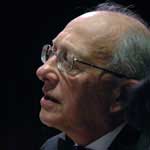
Kalish played, as a solo, a movement from the Concord Sonata by Ives, written as a tribute to the Alcott family. It has a beautiful, impressionistic and nuanced foundation, with overlays of oblique tonalities on a stable, harmonic platform; it builds to a dramatic landscape of cataclysmically atonal, climactic fury, until the stable and tonal hymn-like structure shines through and finally emerges at the end.
Kalish is an amazing painter at the keyboard, brushing atonal swaths perfectly across the placid tonal base, weaving the elements with astounding deftness and sense of drama.
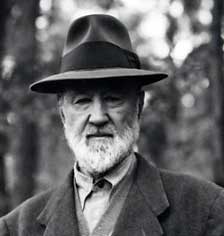
As the middle element of the first half, the pair presented a series of songs by Ruth Crawford Seeger (1901-1953). As Upshaw recounted for the audience, she was a wonderfully talented composer who, as a young woman, produced some distinctive and promising works. But, living in an age in which sex roles were largely inflexible, she took major responsibility, in her marriage with composer Charles Seeger, for raising three children. Sadly, Ruth Crawford Seeger died at a young age, when she was just gaining some time to begin composing again seriously.
The three songs of Seeger’s (taken from a collection of five) are based on poems by Carl Sandburg, who was a friend of the composer.
Home Thought is a plaintive and longing ballad, intoning, touchingly, the phrase “speak to me.” White Moon is dark, quiet and mysterious, beginning with the image of moonlight entering a baby’s room. Joy is a rollicking theme, with striking images (like that of an Apache dancer), and the suggestion to “let joy kill you” and to “keep away from the little deaths” at its ironic core.
The first half wound up with a series of songs from The Nursery by Mussorgsky, with text written by himself. It was sung in Russian, but Upshaw gave a good summary of the narratives of the pieces beforehand.
In The Corner is a very funny song about a nanny who enters the child’s room to find an unholy mess, and explodes in the face of it; in response, the kid gets upset and says nasty things about the nanny’s nose. Upshaw did a brilliant dramatic job of portraying contrasting nanny and child voices and doing it all sonorously and artfully throughout this little saga, all in Russian.
The Beetle, again a child’s song, depicted a kid’s wonder about a beetle that seems to have died, involving wonder, then horror, then stunned silence. Lullaby was another great ploy, of a child singing one to a doll.
In Evening Prayer, a kid is trying, at bedtime, to pray for all the necessary relatives, and it turns out there are a lot of them, amusingly abundant.
Hobby Horse Ride is a rollicking fun romp, filled with lots of “heys” and other non-verbal sounds.
Upshaw was hysterically funny in all of these roles. What a fabulous actress she is; and throughout, what an amazing, resonant tone she provided.

The program, as of the end of the first half, was already incredibly rich and varied; there was a surplus of varied riches in the second half.
It began with a series by Debussy, Chansons des Bilitis, containing three erotic songs (as Upshaw noted) based on poems by Pierre Louÿs, written in 1894, couched in classical themes. In the last of the songs, one of the lovers breaks a piece of ice and looks through it at the light, commenting abstractly and indirectly on its relation to love – a perplexing and quizzical image, anticipating the sort of translogical narrative that Dadaists and Surrealists were soon to explore in literature, painting and film.
As Kalish described before the subsequent pieces, Brahms’ late works were largely inspired by his encounter with a clarinetist (Richard Mühlfeld) whose musicality fueled his own sensibilities after he thought he was done composing.
Intermezzo (Opus 119, No. 1) is one of the late piano works, which Kalish played with just the kind of sensitivity to color and mood this sophisticated piece requires. It opens like Bach, placid and meditative, with none of the characteristically passionate swirl of earlier Brahms; then, it builds, subtly, into a more Romanticized landscape.

Adding to the mood of the Brahms was a series of songs by Robert Schumann.
Spring demonstrated a lovely thematic interplay between the piano and the voice. When, as was especially the case here, Kalish and Upshaw really get going, the interchange is so subtle and nuanced it is like listening to the give and take of a gentle, compelling conversation.
Lotus Flower, based on a poem by Heinrich Heine, Mignon, based on words of Goethe, and Declaration, with words by Friedrich Rückert, were all opportunities for Upshaw’s voice to resonate. When that voice opened up, as it did in the next to last of the Schumann pieces, it was vast and amazing.
The formal part of the evening ended with a great series of songs by the contemporary composer, William Bolcom. These three cabaret songs were funny, wild, composed inventively, with a combination of zip, fanfare and improvisation. Kalish paid great tribute to Bolcom and spoke warmly of his compositions, bringing some attention to his piano rags.
Black Max was very dark and funny, strongly reminiscent of Kurt Weill, with the recapitulation of the phrase “Black Max” was intoned pointedly like the phrase “Big Bad John” in the Johnny Cash classic of the same name.
Waitin’ had a beautiful, placid ending. George was offbeat and appealing, like Cole Porter on steroids.
Totally fun, all of them, and interestingly written. They inspired me to listen to dig out more Bolcom and listen.
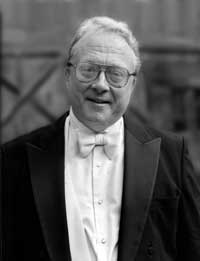
The immediate and resounding standing ovation drew Kalish and Upshaw back for two encores. (If it had been up to the audience, they would have gone on late into the night.)
The first, by Ives, Down East, beautifully, richly and characteristically encapsulated a hymn in an Ivesian landscape of semi-tonality.
The second, In Spring, by Schubert, was pure loveliness: rich, resonant, and expressive of the fabulous talents and musical sophistication of this pair of performance masters.
– CM
Leave a Reply