Musical Theatre
Music by Robert Reale
Lyrics by Willie Reale
Book by Richard Dresser
Story by Richard Dresser and Willie Reale
Directed by Diane Paulus
With: Colin Donnell (Johnny O’Brien), Stephanie Umoh (Daisy Wyatt), Charl Brown (Barman, Porter, Tim Wyatt), and Burke Moses, Jeff Brooks, Robert McClure, Joe Cassidy, Alan H. Green , Carly Jibson, Kaitlyn Davidson, Kirsten Wyatt, Paula Leggett Chase, Charles Turner, Erik March
American Repertory Theatre
Loeb Theatre, Harvard University
Cambridge, MA
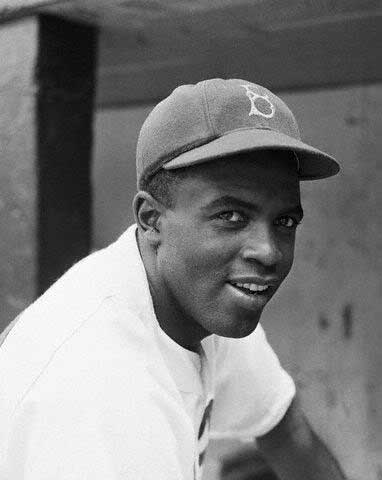
This show has an interesting underlying thesis: that the curse of the Red Sox – their inability to win a World Series over the course of many decades – is not a great mystery. In fact, the explanation is fairly obvious: racism. Whereas the Brooklyn Dodgers broke the color barrier in 1947 by hiring Jackie Robinson, the Red Sox took twelve years longer, until 1958, to hire Pumpsie Green, their first player of color. The Red Sox were the last major league baseball team to become integrated. In addition to the shame of such delay, what a load of talent was left behind because of that!
To convey this point, Johnny Baseball proposes an interracial romance, set in the 1920s, between one of its putative star players of the time (the apocryphal Johnny O’Brien) and an African-American woman, Daisy Wyatt. Dramatic complexity develops and frames a cushion for the frustrating actual decades of Red Sox history which follow. In the end, the drama, and its evolution – involving decades of descending, and descendant, realizations – is sweet and evocative, and very much to the point.
The lyrics to the show are quite engaging, though it would be difficult to imagine anyone not from Boston really getting them. There is so much Boston-specific allusion that it is almost hard to imagine producing the show elsewhere.
The music, generally, is pretty straightforward. I went to this production with a film composer friend of mine and he confirmed my sense that the thematic invention was fairly routine. It was not unpleasant, and some of the numbers were fairly catchy, but my general impression was that this score had many traits of boilerplate musical theatre music. It certainly did not have the daring one finds in the works of great musical composers like Sondheim or Bernstein, nor the catchiness of other of the somewhat less-greats. But, to e fair, when I first heard Stephen Schwartz’ score for the wildly successful musical, Wicked (2003), I thought it was very routine, yet it grew on me quite a bit over time.
It’s not the music of Johnny Baseball, however, by which it will be judged but by its most important overall message and by the way in which its somewhat sentimental, but still evocative, book carries it to light.
This production caps Diane Paulus’ first year as Artistic Director of the ART, one marked by some courageous experimentation in several different directions. It is not easy to turn an established ship like the ART off its traditional course, but Paulus has demonstrated a good sense of how to begin to do that.
The production of Sleep No More (a wild and wordless dramatic interpretation of Shakespeare and Hitchcock set in thirty or so set-filled rooms in an abandoned school in Brookline) caused a sensation, especially among twenty-somethings, earlier in the season. It’s not easy to get a new crowd – and a young crowd – fired up about new doings at a not-new theatre, but that production managed to do just that. Johnny Baseball does not create quite the same sensation and sense of departure, but like the ART’s production of Clifford Odets’ Paradise Lost several months ago, it represents a worthy attempt to bring important social concerns to a theatrical audience with more traditional inclinations. All in all, it collectively represents a nice balance, especially for a first year.
– BADMan
Leave a Reply