Concert
Boston Symphony Orchestra
Symphony Hall
January 21, 2017
Guest Conductor: Juanjo Mena
Symphony No. 1 in D, opus 25, “Classical”
Miecyslaw Weinberg
Concerto for Violin and Orchestra, Opus 67 (1959)
Gidon Kremer, Violin
Pyotr Ilyich Tchaikovsky
Symphony No. 4 in F Minor, Opus 36
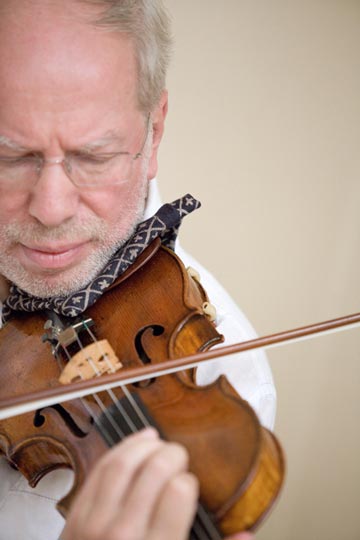
Violin virtuoso Gidon Kremer was born in the late 1940s in Riga, Latvia of a Jewish father who had survived the Holocaust and a non-Jewish mother. He trained with David Oistrakh in Moscow before going on to a celebrated international career.
He has chosen an interesting work to feature in his BSO appearance this season. It’s a concerto he’s apparently curating and promoting by a Jewish Holocaust survivor from Poland named Miecyslaw Weinberg. It’s a curious work, more suggestive than deeply moving, but, in Kremer’s hands, certainly worth listening to.
As the program notes clearly attest, Weinberg owes much of his inspiration to Shostakovitch, and this piece resounds with that influence. Much of it has the sometimes dour and sometimes clangy feel, also evident in Shostakovitch’s work, reminiscent of Soviet factories at high pitch. The inspiring nuance in Shostakovitch’s work is that, interspersed with the grey and rhythmically invasive factory-type sounds are lots of other tonal motifs that create a sophisticated and layered dimension. In much of Shostakovitch’s work there are periods when frolicsome circus music prevails. One feels, during those passages, that Shostakovitch’s ironic sensibilities had been called into play so extensively that he needs to press that circus button and add a heavy dose of comedic diversion from the tragedy of state-driven horrors.
Though the work is interesting and suggestive, that kind of dimensionality familiar in Shostakovitch is not as evident in this work by Weinberg. He renders much of the same sense of cultural vacuity and governmental invasiveness as does Shostakovitch, but Weinberg’s somehow seems more like an echo of Shostakovitch than a clear expression of his own.
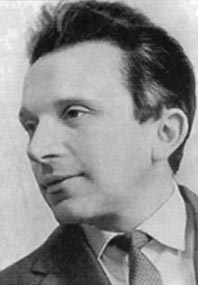
Apart from that imitativeness of Weinberg’s which clearly can’t generate the same kind of spontaneous responses as does Shostakovitch with his own honest inspirations, there’s something else which seems very obvious and missing. Weinberg, a Jew, clearly does not draw on his own heritage in any way except for the most subtly suggestive and barely present moments when they shine through the Shostakovitch landscape just a bit. Jewish popular and liturgical music seem not to have influenced Weinberg significantly, somewhat oddly absent and contributing to the sense of a missing element of more personal inspiration.
Kremer played the piece beautifully, nonetheless, giving it as good a reading as one could hope for.
As an encore, Kremer played an evocative solo violin piece written by Igor Lobada, a contemporary Ukrainian composer whose work, as Kremer described it, commemmorates the endless sufferings of the Ukrainian people.
The delightful Prokoviev Classical symphony – an early work deeply inspired by Haydn – which opened the concert was given a rapid and crisp treatment by guest conductor Juanjo Mena. Mena is a taut and precise conductor who flourishes in passages that are quick and crisp. The finale of the Prokoviev is just like this, and done the way that Pena did it, at breakneck speed with a virtuoso orchesta, it came off exceedingly well. The precision of the BSO strings, particularly the violins, in managing the rapid intricacies of that last movement, came dramatically through.
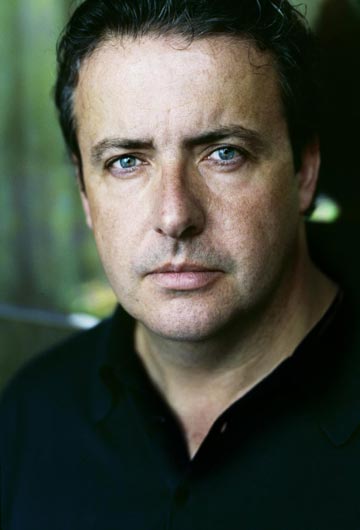
Photo: Sussie-Ahlburg
The more lyrical and sonorous passages of the Classical symphony did not always emerge quite as distinctively under Pena’s baton. While greatly precise and striking in the passages that thrived on that clockwork specificity, Pena did not always give as much attention to the elongated lines that held the spaces between.
This was also clearly evident in the great fourth symphony of Tchaikovsky. The movement of the Tchaikovsky Fourth Symphony that fared best under Pena’s direction was the third movement, the entirely plucked Scherzo. It’s a terrific movement, so fun and weird, and Pena’s lightspeed delivery and the BSO strings’ absolute precision made it a stellar experience. The more lyrical passages, however, in this wonderfully sweeping Romantic piece, seemed less evocative.
Pena ripped through the last movement of the Tchaikovsky which gained energy from speed rather than from an elegant shaping of phrase. The audience roared to its feet afterwards, clearly awestruck by that energy. Yet, there was something of the plaintive eloquence so emblematic of Tchaikovsky that felt a bit lost in the scramble.
– BADMan
Leave a Reply