Film (2012)
Directed by Joe Wright
Screenplay by Tom Stoppard
Based on the novel Anna Karenina (1877) by Leo Tolstoy
Kendall Square Cinema
Cambridge, MA
Cinematography: Seamus McGarvey
Film Editing: Melanie Oliver
Original Music: Dario Marianelli
Costume Designer: Jacqueline Durran
Hair and Makeup Designer: Ivana Primorac
Production Designer: Sarah Greenwood
Set Decoration: Katie Spencer
Supervising Art Director: Niall Moroney
With Keira Knightley (Anna Karenina), Jude Law (Karenin), Domhnall Gleeson (Levin), Alicia Vikander (Kitty), Aaron Taylor-Johnson (Vronsky), Matthew Macfadyen (Oblonsky), Kelly Macdonald (Dolly), Olivia Williams (Countess Vronsky), Emily Watson (Countess Lydia Ivanova), Michelle Dockery (Princess Myagkaya)
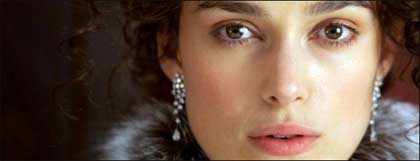
in “Anna Karenina”
Anna Karenina (Keira Knightley) is married to Karenin (Jude Law) and they have a young son. But Anna is approached by a roguish young fellow, Vronsky (Aaron Taylor-Johnson), and begins a passionate affair with him. She risks everything, which, in the end, has dire implications. In a side story, Levin (Domhnall Gleeson) seeks the affections of Kitty (Alicia Vikander), one of Vronsky’s former dalliances. Through durable efforts, Levin and Kitty come together and pose the image of a romantic alternative to the Anna-Vronsky debacle.
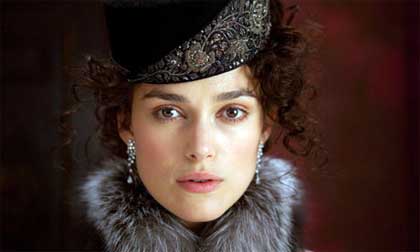
in “Anna Karenina”
© 2012 – Focus Features
Anna Karenina is one of the world’s great novels. Personally, I put it in the top five, along with Dostoyevsky’s The Brothers Karamazov and George Eliot’s Middlemarch. It has not had a film treatment for awhile, so I enthusiastically looked forward to this one. In addition to having the obvious charms of Keira Knightley in the leading role, the screenplay was written by Tom Stoppard, the great contemporary British playwright and one of my personal favorites.
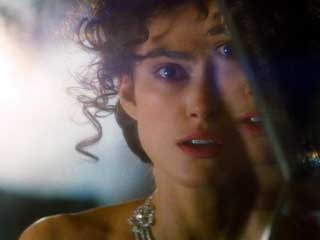
in “Anna Karenina”
© 2012 – Focus Features
Off the bat, let me just say that if you are a Keira Knightley fan, it does not really matter what the quality of this film is: go see it. The cinematographer and whoever did her costuming and makeup should be given the Nobel Prize – she is drop dead gorgeous in this film.
Other than that, I will have to chew on my words. This film, to a considerable degree of surprise and disappointment, did not live up to expectations.
Much as it pains me to say it, I have to say that the script just did not do it for me. I have enormous respect for Stoppard, both as a playwright and as a screenwriter. I have been a serious fan of his plays for many years. As well, I think his film script for Shakespeare in Love (1998) is truly great.
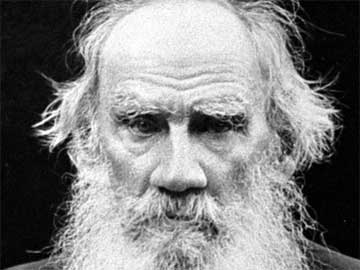
But there is something in the writing here that is off base in several different ways.
I found the tone weirdly misconceived. Stoppard sets the film up as a kind of theatrical look into the world of the novel. The opening scenes include the frame of a proscenium and reminders of this stance continue frequently throughout the film. What was he thinking – that this novel is essentially theatrical, a kind of over-the-top nineteenth century operatic drama? If so, this method of reminding us, constantly, that we are, in effect, looking at characters on a stage, is, to say the least, overused. Frankly, the technique did not work at all for me. Of course, Anna Karenina is a great, vast, tragic, operatic tale. That is the core of what much of it is about. So, why not just let that be? Stoppard might have well eliminated this artificial construct and done a lot better.
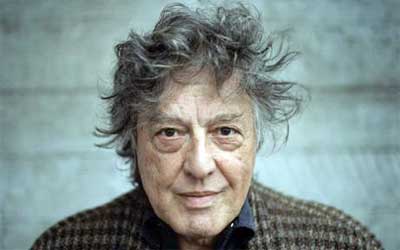
Photo: Laura Hynd
I presume that Stoppard is making an effort to comment on something about the philosophical stance Tolstoy puts forth in the novel. There, the agricultural world of Levin is strongly contrasted with the urban and society-driven world in which Anna operates. Ultimately, Levin is the hero of the novel, demonstrating that one can bring a cultivated intelligence to the problems of agriculture and peasantry and do a lot of good in the world. His persona is much less glamorous than is Anna’s, but in the end his way of being, and his way of loving, is far more successful. By constantly reminding us of the stage upon which Anna operates, does Stoppard hope to draw that distinction between the theatricality of her society existence and the down to earthness of Levin’s existence? If so, it is a point not particularly well put forward.
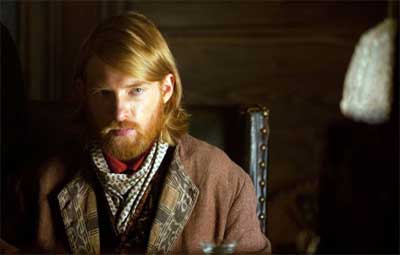
in “Anna Karenina”
Photo: Laurie Sparham
© 2012 – Focus Features
The film also dwells so exclusively on Anna’s and Vronsky’s romance that it does not pay sufficient attention to Levin’s character or to his romance with Kitty. In the novel, Levin’s story is at least as pronounced as Anna’s and we get a rich sense of his generous philosophical disposition. Here, in this film, we are left with just a few scraps, letting us simply see Levin as a decent, bashful fellow who loves Kitty overhwelmingly. But there is far far more to Levin’s character and his aspirations that give meaning to the novel. And there is far more, as well, to the nature of his courtship and romance with Kitty in the novel than is depicted, or even suggested, here. Granted, a film cannot do what a novel does, but this film spends so much time on the hot flirtations of the Anna-Vronsky romance that it has little time for much else.
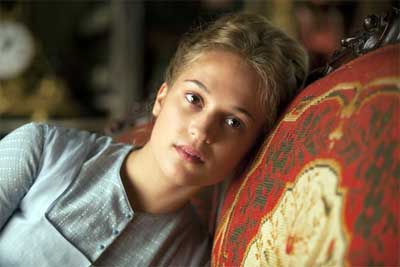
in “Anna Karenina
© 2012 – Focus Features”
Vronksy, here, is shown as a kind of pretty boy, and that really seems off. This is more a function of casting than any issue with the screenplay, but it contributes to a quite different sense of the romance than one gets from the novel. In the novel, Vronsky comes across as a young, but mature and dashing, rogue. In the film, one barely gets the sense he is old enough to be at all roguish. He is so adolescent-seeming in the film that one figures that his dalliance with Anna is merely a school prank. In the novel, one clearly sees that Vronsky’s lack of nobility is an adult shortcoming, and a mature failure rather than boyish inadvertence.
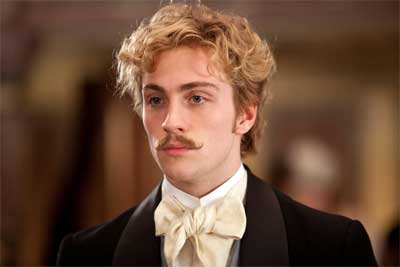
in “Anna Karenina”
© 2012 – Focus Features
And, Karenin, though played very well by Jude Law, is also oddly written. In the novel, Karenin is an unappealingly officious and unaffectionate husband. He is quite a bit older than Anna and we understand that the reason she dallies with Vronsky is because there is such a mismatch with Karenin. But, Karenin, here, is a pretty appealing guy. Jude Law makes him so, not only physically but also emotionally. In the end, one gets a singular sense that Anna is simply an irresponsible and unappreciative partner, and her choice to be with Vronsky pure indulgence. That is not what comes across in the novel. There, Karenin, of course, thinks Anna is reckless and unappreciative, but the reader sees that she is drawn to Vronsky, and away from Karenin, out of a thirst for life. In this film I did not find that at all. Karenin, in Stoppard’s words, under Joe Wright’s direction, and in Jude Law’s hands, seems like a much more decent and desirable guy than Vronsky, and Anna’s choice simply vain.
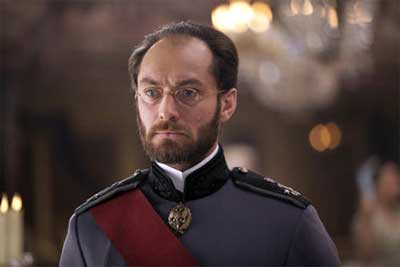
in “Anna Karenina”
© 2012 – Focus Features
In addition to her great beauty, given the right opportunity, Keira Knightley is a wonderful actress. I thought that her performance in Pride and Prejudice (2005), directed by Joe Wright, was spectacular. She was a nuanced and completely effective Lizzie Bennett. In Atonement (2007), also directed by Joe Wright, she was also very effective, as she has been in numerous other roles, such as, more recently, in Seeking A Friend For The End of the World.
Here, there is an amazing display of her physical grace and penetrating good looks, but the script just does not offer enough to allow her to act in a significant way. Whatever the cinematographer does is geared to focus on the visual wonder of Knightley and it does that expertly. Were this a film purely about a beautiful woman looking beautiful it would win all the awards. But, unfortunately, this film has not afforded her the opportunity to do what I had hoped it would – give this very good actress an opportunity to depict this great, great role through the lens of her enormously graceful self.
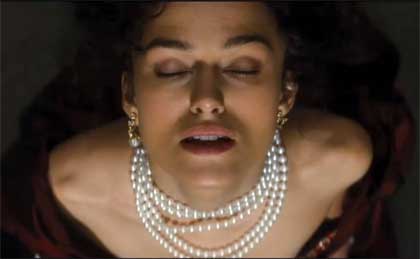
in “Anna Karenina”
© 2012 – Focus Features
Joe Wright, who directed Knightley in Pride and Prejudice and Atonement and did a very good job there, seems to be off his game here. The world of Anna Karenina has a vast epic sweep to it and quite different from the more contained, and British, narrative contexts in which Atonement and Pride and Prejudice develop. There may, indeed, be something about this vast, Russian, epic scale that has not sat entirely well with either Stoppard’s or Wright’s approach.
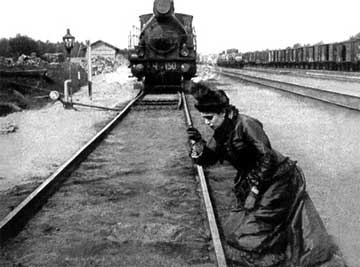
Film editing, as well, seemed not quite as fluid and graceful as it might have been, yielding, to me, a sense of jumpy transitions that added to the general sense of dislocation.
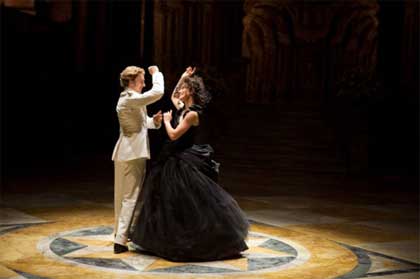
Keira Knightley as Anna
in “Anna Karenina”
© 2012 – Focus Features
In addition to wonderful cinematography and costume design, the choreography was striking. Ballroom dance scenes were intoxicating, and from those one easily got a sense of how a frustrated beauty like Anna could be suddenly, and injudiciously, swept off her feet.
– BADMan
An excellent review! You have hit upon many of the weaknesses of this film, to which one might add the highly stylized approach that made it feel more like a musical comedy, e.g. the synchronized stamping of papers and related dance-like moves in the government office (also repeated too many times). So many “poor choices” by the director–I found it difficult to watch, and the power of the novel was lost.